Frameworks for AI delivery
and engineering leadership.
There's more written about AI than there is built with it. These are notes from the building — frameworks for AI governance, multi-agent system design, and enterprise readiness, alongside the post-mortems and patterns that surface from the actual work. Written from ProductiveHub's fractional CTO practice, for the people doing the same job from the inside.
When the Cloud Math Stops Working: Consolidating Dev Environments and Moving GPUs On-Prem
A 25-developer team was running its dev environments on three duct-taped tools and a GCP fleet dominated by two always-on A100 GPUs. Consolidating onto Cloudflare Zero Trust removed the dependency on cloud VMs — and that one property is what made moving the whole environment, GPUs included, on-prem possible. Here's the switch, the math, and what I'd tell another owner.
Fractional CTO vs CAIO: which one do you actually need?
A fractional CTO owns the technology. A fractional CAIO owns the AI. Most companies need a mix — but the mix is not 50/50, and most CTOs are not CAIOs by default. Here's how to tell which role your company actually needs first.
Fractional CTO cost: what you actually pay (and what you don't)
Fractional CTO cost is a function of scope, mix, and decision rights — not hours. Here's how to read a fractional CTO proposal, the variables that actually drive the number, and the categories of cost most companies underestimate (and overestimate).
Fractional CTO vs full-time CTO: a decision framework
Fractional CTO vs full-time CTO is a decision that depends on stage, runway, role attractiveness, and how decisions are accumulating. A framework that walks through the real differences — cost, risk, decision rights, ramp time, exit cleanliness — and the bridge pattern most companies actually run.
AI Governance Framework: From Proof to Procurement
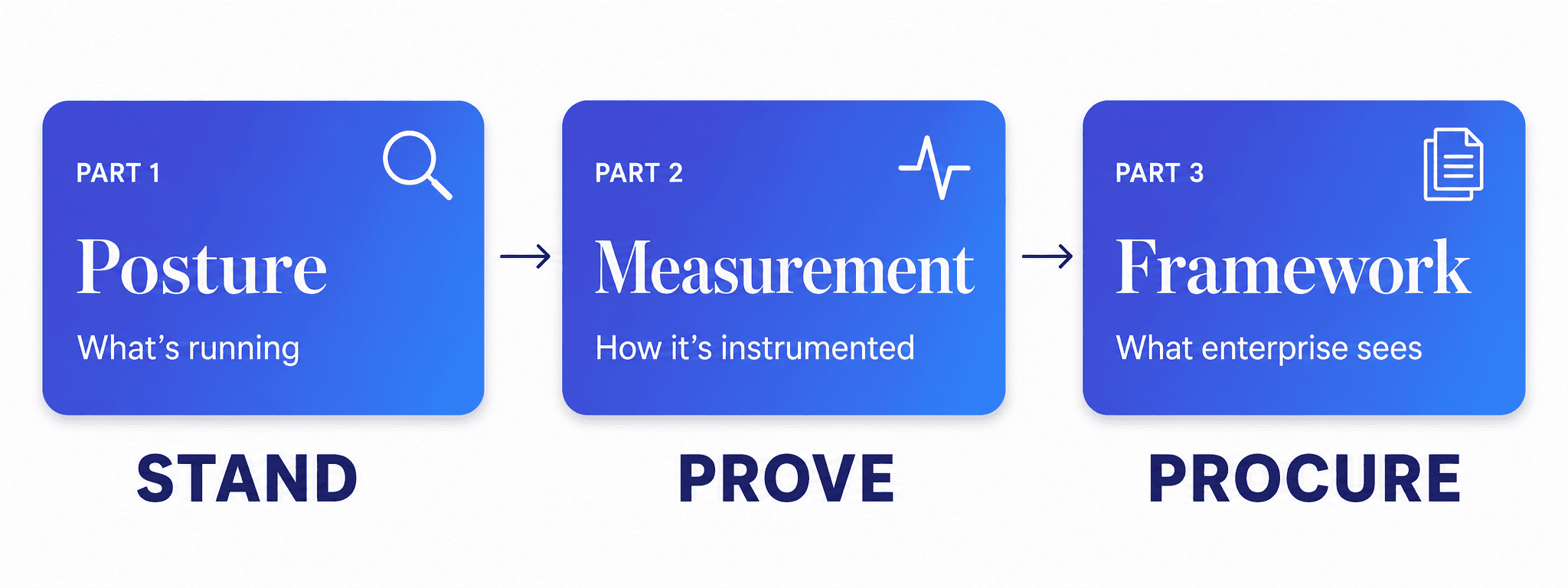
The third part of the AI governance series: how we package the posture assessment and measurement layer into a complete AI governance framework — and the Stand-Prove-Procure Method we use to build one with every client.
When to hire a fractional CTO (and when not to)
Most fractional CTO conversations start with a real signal — a stalled procurement, a missed senior hire, an AI roadmap nobody owns. Six signals that say it's time, three that say it isn't, and the question to ask before either.
AI Governance Measurement Layer: From Posture to Proof
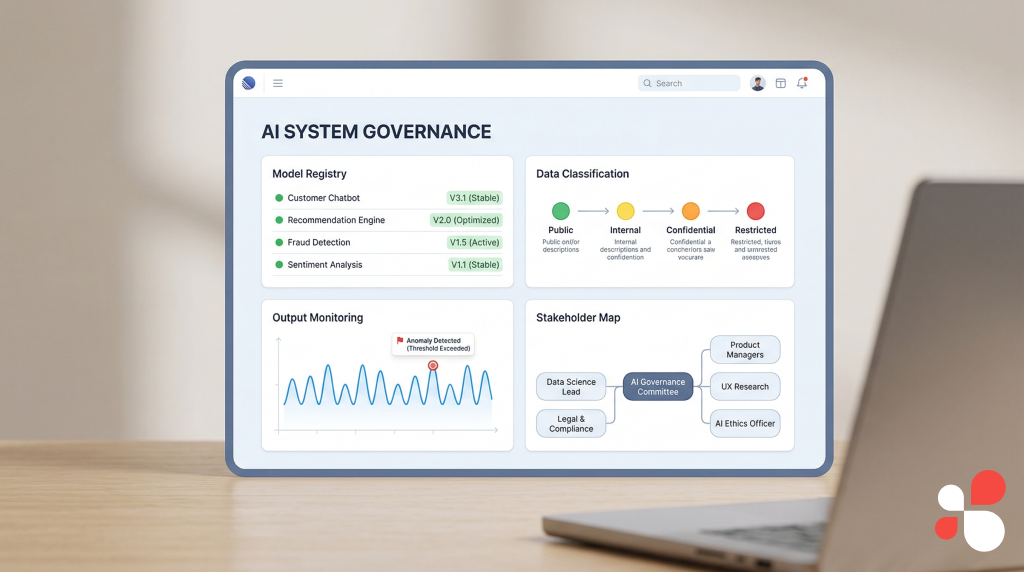
AI governance measurement starts with instrumentation, not policy. Here's how we build the model registry, data classification layer, output monitoring setup, and stakeholder impact map that turn a governance posture into something demonstrable.

AI Governance Posture Assessment: Where Your AI Actually Stands
Before you can govern your AI systems, you need to see them clearly. The posture assessment is how we begin every enterprise-readiness engagement — mapping what's actually running, not what the architecture diagram says.
Major Cloud Outages 2024-2025: $5B in Lessons Learned
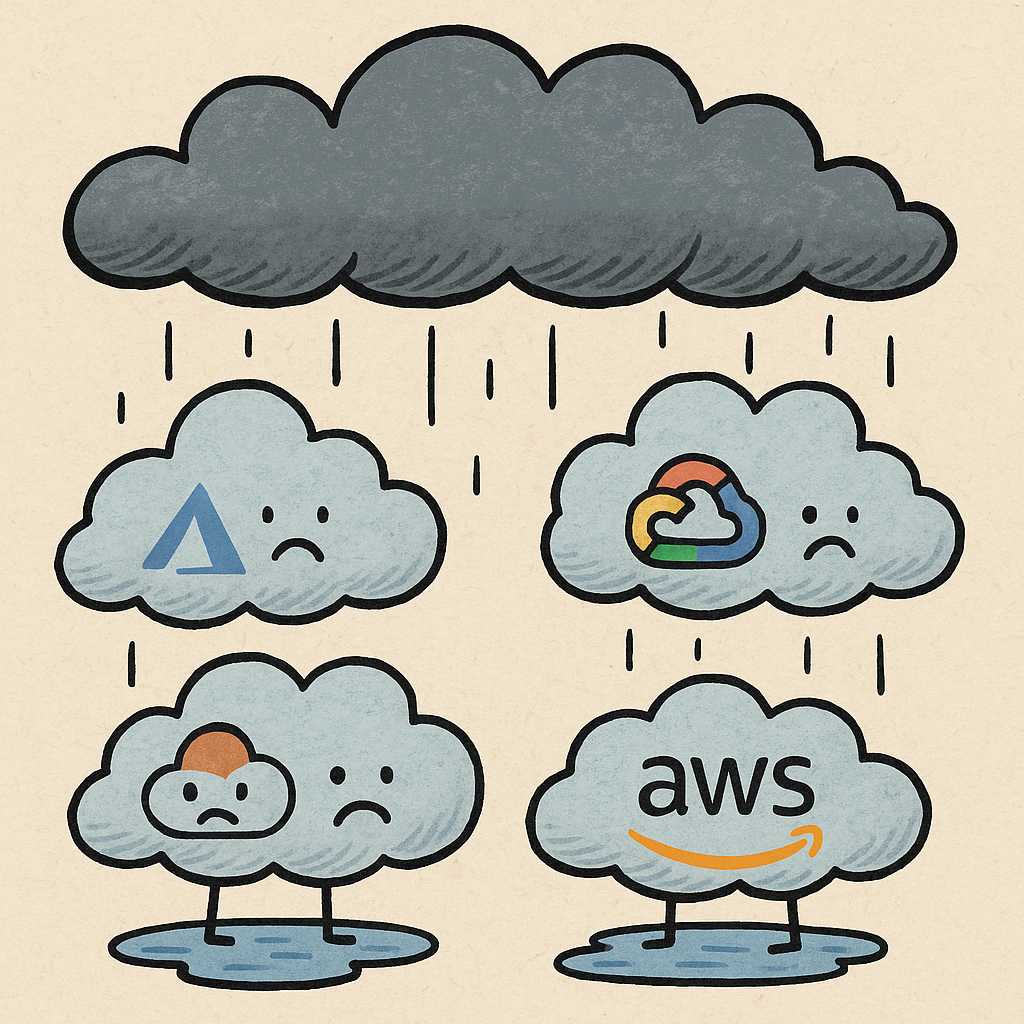
A comprehensive analysis of 14 major cloud outages over 24 months reveals that 68% were caused by human error. Learn how to architect resilient systems that survive the inevitable failures.

Remote Team Topology: 5 Patterns for Distributed Teams
Learn how to structure remote engineering teams using proven software architecture patterns - from microteam architectures to hub-and-spoke models that scale distributed excellence.