ProductiveHub — AI Transformation & Modernization

AI transformation & stack modernization since 2019

Responsible AI transformation. Built with engineering excellence.

We take AI from pilot to production — and modernize the platforms, data, and delivery practices it depends on. Senior engineers who set the strategy and write the code.

What we actually do

Close the gap between
AI ambition and production.

Most AI experiments never make it past the demo, on systems that weren’t built for them. We find the workflows where AI earns its keep, and modernize what sits underneath so it runs reliably at scale.

Then we keep it in production past the first invoice — a YC startup’s provider bill cut 47.7%, W6W taken from 10 to 152 shipped integrations a week.

Senior leadership with every engagement. Code, runbooks, and a team that can run it — all yours.

From Pilot to Production

AI Transformation

Find the workflows where AI pays for itself, then build it into production — agents, automation, and the evaluations and guardrails that keep them honest.

  • AI Strategy & Use-Case Roadmap
  • AI Agents & Workflow Automation
  • AI Cost & Reliability Engineering
Modernize the Foundation

Platform Modernization

Re-architect the legacy systems, data, and infrastructure AI depends on — monoliths into scalable services, manual releases into automated pipelines.

  • Legacy & Monolith Modernization
  • Cloud, Data & Platform Engineering
  • DevOps, MLOps & Business Continuity
Enterprise Readiness

AI Governance

Structured governance assessments and frameworks that prepare your AI systems for enterprise procurement and regulated markets.

  • AI Posture Assessment
  • Compliance & Risk Management
  • Monitoring & Accountability

Client stories

Real work. Measurable impact.

From the first working agent to the systems behind it. Here’s what changed.

All case studies

01 of 08

Part 3 9 min read

AI Governance Framework: From Proof to Procurement

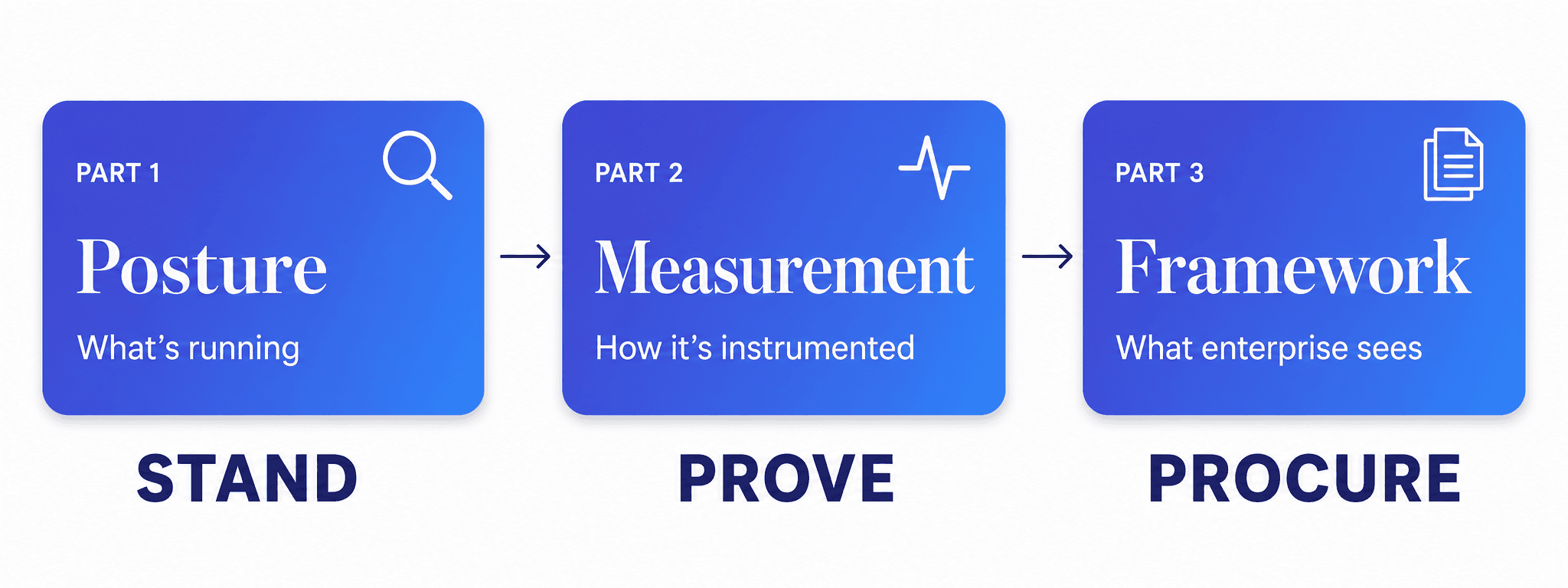
The third part of the series: how we package the posture assessment and measurement layer into a complete AI governance framework — and the Stand-Prove-Procure Method we use to build one with every client.

Seven-Artifact Pack for procurement review
Stand-Prove-Procure three-stage method
Procurement Q→Artifact mapping
AI Governance Framework — Stand, Prove, Procure stages connecting posture assessment, measurement layer, and seven-artifact procurement pack

Common questions

AI transformation consulting,
in plain answers.

ProductiveHub is an AI transformation and modernization consultancy for growing companies. Senior engineers lead the work and write the code, from AI agents to rebuilt legacy platforms. These are the questions buyers ask us first.

What does an AI transformation consultancy actually do?

It takes AI from an idea or a stalled pilot to software your team uses every day. We find the workflows where AI pays for itself, build the agents and automation, and modernize the systems and data underneath so they hold up in production. After launch, we keep cost, reliability, and governance in check.

Why do AI pilots stall, and how do you get one to production?

Common blockers are unclear ownership, no agreed measure of success, and data or systems that weren’t built for production. We give each initiative one owner, a clear bar for production readiness, and criteria for stopping work that isn’t paying off. Then we measure the outcome it is meant to change: hours saved, cycle time, or cost per task.

AI adoption alone doesn’t guarantee lower costs. In the Federal Reserve’s 2025 survey of US businesses with 1–499 employees, published in 2026, 77% of firms using AI reported no change in labor costs, even as 71% reported higher productivity.

Source: Federal Reserve: 2026 Report on Employer Firms

Do we need an AI readiness assessment first?

Usually a short one. Before you spend on models, we check three things: whether your data is clean and reachable, which workflows are worth automating, and who will own the result. You leave with a ranked use-case roadmap and a clear starting point.

Is ProductiveHub a fractional CTO service?

Yes. Every engagement includes senior technology leadership: a fractional CTO, or a fractional chief AI officer (CAIO) when the work is mostly AI. The person who sets the architecture also writes code, manages your developers, and stays accountable once it’s live.

Can you take over a late software project?

Yes. Software project rescue starts with an independent code audit: what’s built, what works, and what your team or agency is actually shipping. Then we lead the existing developers to delivery or plan a clean handover, with clear priorities and ownership.

How do you modernize a legacy platform without stopping the business?

In stages, while the old system keeps running. We move legacy PHP and .NET platforms, monoliths, and aging databases to modern stacks piece by piece, with automated release pipelines to make changes repeatable.

For Cohost, new runtime infrastructure and an AI-powered development pipeline took delivery from 2–3 weeks per app to 2–3 apps a week.

How do you cut AI costs?

Measure the cost of every task, route it to the lowest-cost model that still passes your quality tests, trim context, cache prompts, and set hard budget caps. For a YC-backed startup, model routing, context trimming, and self-hosted inference cut AI provider spending by 47.7%.

Do we need AI governance to sell to enterprise customers?

If enterprise buyers are sending you AI security questionnaires, it’s time to put governance in place. We start with an AI posture assessment, then build the controls and evidence procurement teams and auditors ask about: an AI use policy, a risk register, vendor reviews, and ongoing monitoring.